
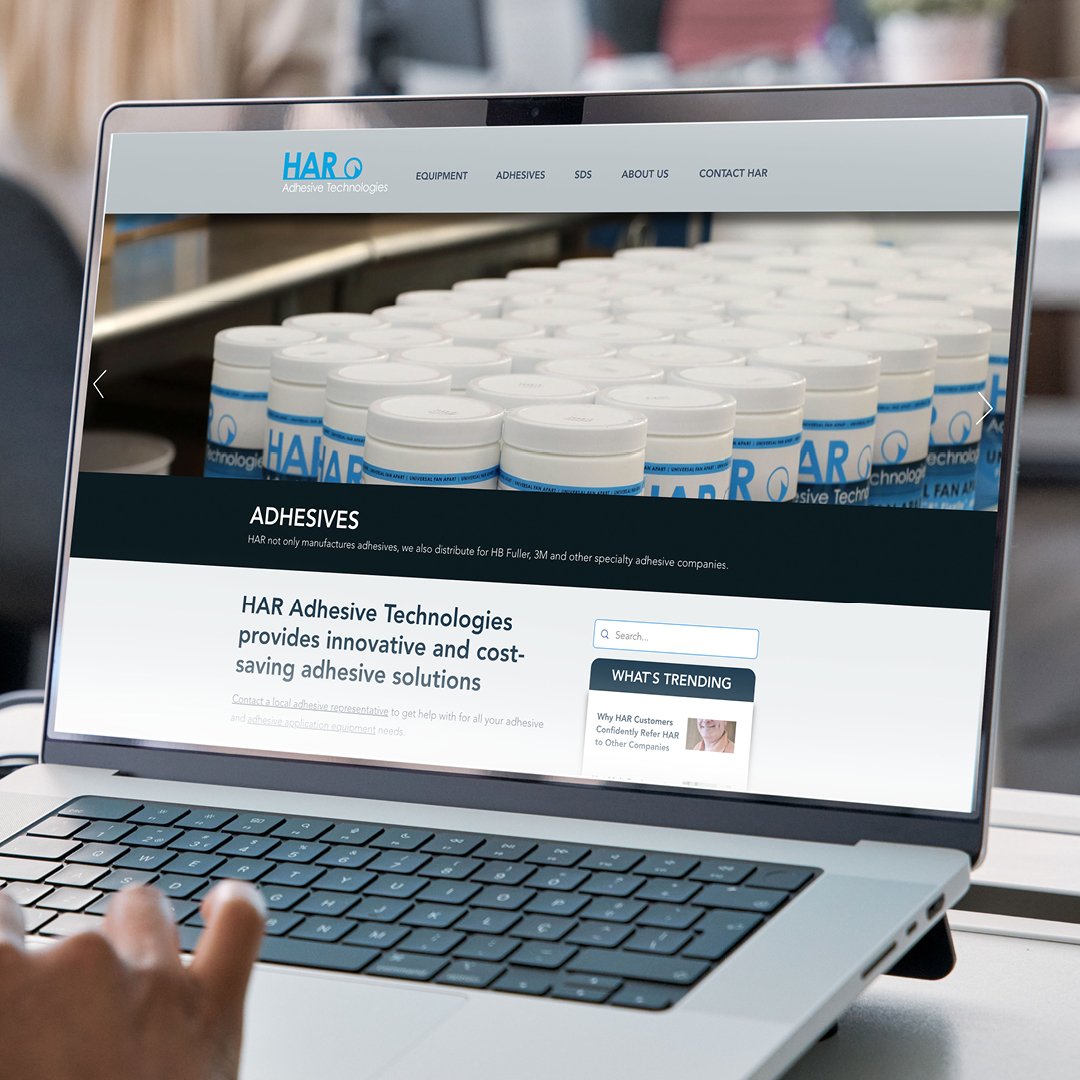
HAR Adhesives

Mentor Glass
SEO-friendly structure: Clean URL structures, proper headings, meta tags, and semantic markup help search engines crawl and index content effectively. On-page optimization and technical SEO increase discoverability and attract more relevant traffic.
Essential website features expanded:
Clear navigation
Intuitive menu structure with logical categories and minimal depth.
Consistent placement of navigation elements across all pages (header, footer).
Descriptive, user-focused labels (avoid jargon).
Breadcrumbs for multi-level content to help users orient themselves.
Prominent calls-to-action (CTAs) integrated into navigation when appropriate.
Accessible navigation — keyboard operable and screen-reader friendly.
Mobile responsiveness
Responsive layout that adapts to various screen sizes and orientations.
Touch-friendly controls (sufficient button size, spacing, and gestures).
Prioritized content for small screens (progressive disclosure of nonessential elements).
Responsive images and media that scale and load appropriately on mobile.
Mobile performance optimizations, such as minimized DOM complexity and reduced blocking scripts.
Fast load times
Optimized images (compression, responsive image sizes, modern formats like WebP where supported).
Minified and combined CSS/JS, with critical CSS inlined and noncritical scripts deferred.
Use of caching headers and a content delivery network (CDN) to reduce latency.
Lazy loading for offscreen images and media.
Server-side performance: use efficient hosting, HTTP/2 or HTTP/3, and database/query optimization.
Regular performance monitoring and audits (e.g., Lighthouse metrics: FCP, LCP, CLS).
Contact forms
Simple, focused forms with only essential fields to reduce friction.
Clear labels, inline validation, and helpful error messages.
Spam protection (CAPTCHA or honeypot) that balances security and user experience.
Confirmation messaging and optional automated email receipt to reassure submitters.
Secure handling of data (HTTPS, server-side validation, privacy notice, limited retention).
Integration options with CRM, email marketing, or helpdesk systems for efficient follow-up.
Analytics tracking
Implementation of a privacy-conscious analytics tool to capture key metrics (traffic, behavior, conversions).
Proper event tracking for CTAs, form submissions, downloads, and e-commerce actions.
Use of UTM parameters and campaign tracking to measure marketing effectiveness.
Dashboarding and scheduled reports for ongoing insights (traffic trends, funnel drop-offs).
Data governance: consent management for cookies, anonymization where required, and compliance with regulations (GDPR, CCPA).
Regular review of analytics to inform design and content decisions.
SEO-friendly structure
Logical URL structure and site hierarchy that reflects content priorities.
Unique, descriptive title tags and meta descriptions for each page.
Proper use of heading elements (H1, H2, H3) to communicate content structure.
Optimized, semantically structured content with relevant keywords and natural language.
Fast, crawlable pages with XML sitemap and robots.txt configured correctly.
Use of structured data/schema markup to improve search result appearance (rich snippets).
Mobile-first indexing considerations and technical SEO audits to fix crawl errors, canonical issues, and broken links.
Search Engine Optimization
Together, these elements improve user experience and conversions by making the site easy to use, discoverable, and measurable. EnVision Design Group builds websites designed for real-world performance — combining thoughtful visual design with technical best practices, rigorous testing, and ongoing optimization to deliver sites that look great, perform reliably, and drive measurable results.